
6.5 micron aluminium foil is an extremely thin (only 6.5 microns, about one-tenth the diameter of a human hair) pure aluminum or aluminum alloy foil. Due to its excellent barrier properties, flexibility, and lightweight characteristics, 6.5 micron aluminum foil is widely used in food packaging, new energy batteries, pharmaceuticals and building insulation.
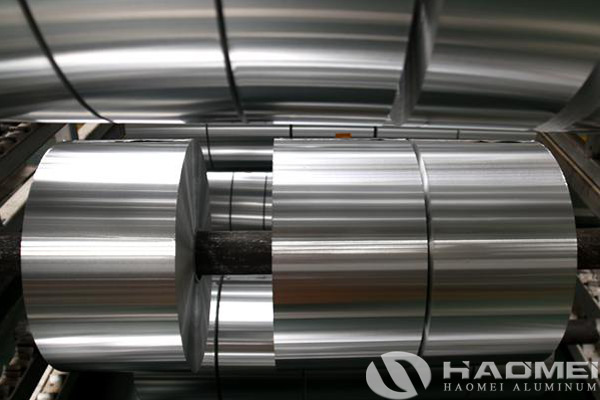
The production process of 6.5 micron aluminium foil using ingot hot rolling method. Molten aluminum is cast into flat ingots, which undergo multiple processes including homogenization, hot rolling, cold rolling, and intermediate annealing, ultimately rolling them into 6.5 micron thick aluminum foil. This processing method has advantages of high-quality billet, is suitable for producing double zero aluminum foil (thickness ≤ 0.01mm, like 7 micron aluminum foil) and aluminum foil for deep processing.
Core characteristics of 6.5 micron aluminium foil:
– Ultra thin structure:
With a thickness of only 6.5 microns, it is thinner and lighter than traditional aluminum foil, significantly reducing material usage while maintaining functionality. For example, in the field of new energy batteries, 6.5 micron aluminum foil weighs only 55% of traditional electrolytic copper foil, but its conductivity and energy density are unaffected.
– Excellent barrier properties:
Moisture and oxidation resistance: Aluminum foil itself is impermeable to gases and moisture, effectively isolating the contents from external environmental influences. For example, in food packaging, 6.5 micron aluminum foil prevents the penetration of oxygen, moisture, and odors, extending the shelf life of food.
Light-shielding properties: It has high reflectivity to light and heat, making it suitable as a heat-insulating packaging material to protect light-sensitive products such as pharmaceuticals and cosmetics.
– Flexibility and processability
Despite its extremely thin thickness, 6.5 micron aluminium foil maintains good flexibility and can be processed into various shapes through rolling, stretching, and shearing to meet diverse needs.
It can be laminated with materials such as paper and plastics to form composite materials with superior performance. For example, laminating aluminum foil with plastic film solves the problems of wrinkling and poor folding resistance of pure aluminum foil, while improving barrier properties and mechanical strength.
– High and low temperature stability
Under extreme temperature environments (such as high-temperature baking or low-temperature refrigeration), 6.5 micron aluminum foil maintains its shape stability, is not easily deformed or broken, and ensures packaging integrity.
Application areas of 6.5 micron aluminium foil:
– Food packaging
Beverage packaging: Used for packaging liquid foods such as milk, juice, and yogurt to prevent oxygen and moisture from entering, maintaining the freshness and nutrition of the beverage.
Solid food packaging: Used for packaging meat, vegetables, fruits, etc., extending shelf life and isolating them from sunlight and external odors.
Cooking applications: Used as a wrapping material for baked goods (such as roast chicken and fish) to ensure even heating and prevent burning; or as a heat-insulating mat to protect cookware and baking pans.
– New energy batteries:
Composite current collector: In lithium batteries, 6.5 micron aluminum foil serves as the negative electrode current collector, combined with copper foil to form a “sandwich” structure, improving battery energy density and safety.
Lightweight advantages: Compared to traditional materials, 6.5 micron aluminum foil can reduce battery weight and energy consumption, meeting the new energy industry’s demand for high energy density and lightweight design.
– Pharmaceutical packaging:
Used as packaging material for tablets and capsules, protecting medicines from moisture, oxygen, and light, extending shelf life.
When combined with plastics, it forms high-barrier packaging, meeting the requirements of a sterile environment for pharmaceuticals.
– Building insulation
Insulation material: Aluminum foil laminated with kraft paper or aluminum foil cloth is used as an air gap to reflect heat and improve building insulation performance.
Decorative materials: Aluminum foil composite sheets (such as aluminum foil foam boards and aluminum foil asbestos sandwich panels) are used for interior or equipment surfaces, combining decorative and functional properties.
– Other applications:
Electronic products: Used as a shielding layer in mobile phones, tablets, and other products, utilizing its electromagnetic shielding properties to protect internal components.
Cigarette packaging: Used as a lining for cigarette boxes to prevent cigarettes from becoming damp and deteriorating.
Industrial packaging: Packaging wires and cables, chemical products, etc., providing moisture-proof and corrosion-resistant protection.
With the rapid development of new energy vehicles and the energy storage industry, the demand for 6.5 micron aluminium foil in the battery field continues to expand. Aluminium foil manufacturers Companies are improving the performance and yield of 6.5 micron aluminum foil through component optimization, smelting process improvements, and continuous casting and rolling technology to meet the demands of the high-end market. Aluminum foil is recyclable and reusable, meeting global demand for environmentally friendly materials, and has broad application prospects in green packaging and the circular economy.
