
As the “heat-conducting core” of heat exchange systems, aluminum fin stock’s lightweight, high thermal conductivity, and ease of processing make it an irreplaceable substrate in the HVAC, automotive, and industrial equipment fields. Having cultivated the aluminium fin stock export market for many years, I frequently engage in in-depth communication with overseas clients and understand their core needs go far beyond “qualified products”—they require customized solutions that can adapt to different regional operating conditions, such as the high temperature and humidity of Southeast Asia and the cold and low energy consumption of Europe, while simultaneously balancing energy efficiency and cost. Haomei Aluminum consistently focuses on ultra-thin and functional R&D. With precise control over overseas markets, our aluminum fin stock products have covered more than 30 countries and regions worldwide, and have repeatedly received written recognition from leading overseas HVAC companies. This trust is the foundation of our deep cultivation in the industry.
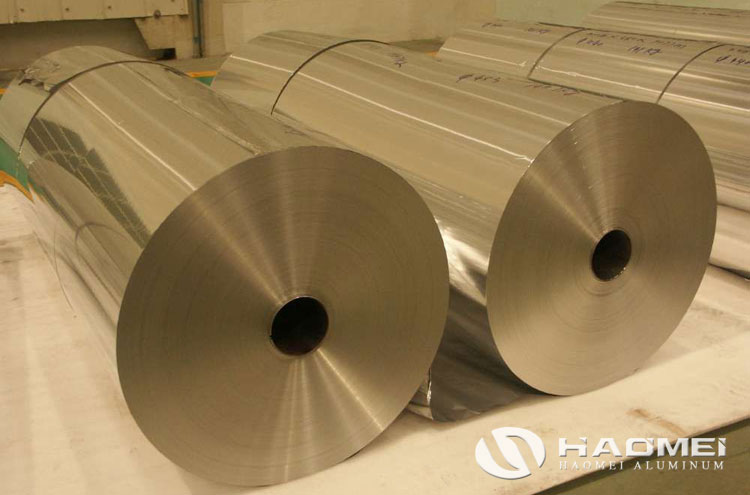
Based on the customized nature of our export business, Haomei Aluminum has built a comprehensive specification system, which is also our core strength in meeting diverse overseas demands. Based on my experience working with over a hundred clients, the thickness focuses on the core range of 0.08-0.2mm, while also offering customizable 0.05mm ultra-thin and 0.5mm thick versions. Tolerances are strictly controlled within ±0.003mm, far exceeding the industry standard of ±0.005mm, perfectly adapting to the precision stamping processes of overseas clients and preventing breakage during forming. Width is adjustable from 50-1200mm, and coil inner diameter is customizable from 75-505mm to meet the needs of different production lines. The alloys are primarily 3003 and 8011, combined with a 4343 composite layer structure, achieving tensile strength of 80-160MPa and elongation ≥10%. Mechanical parameters can be precisely optimized according to the client’s actual working conditions, balancing formability and durability.
Each product iteration stems from real-world feedback from overseas clients—a profound insight gained from years of product development work. To cater to diverse overseas applications, we have developed four core series of aluminum fin stock products:
Hydrophilic aluminum foil features a nano-three-layer composite coating with a contact angle as low as 15°, improving condensate drainage efficiency by 60%, making it the most favored model when dealing with Southeast Asian air conditioning manufacturers.
Hydrophobic aluminum foil focuses on frost and corrosion prevention, specifically designed for cold chain and dehumidification equipment, solving the frosting problem for Nordic customers in low-temperature conditions.
Anti-corrosion aluminum foil incorporates an anti-salt spray coating, increasing corrosion resistance by 3 times, suitable for marine climates and harsh industrial environments.
Brazing aluminum foil features a 4343/3003/4343 double-sided composite structure, suitable for vacuum brazing of automotive radiators, and after multiple rounds of testing, it has finally obtained certification from European and American automakers, securing our entry into the overseas automotive supply chain.
In export business, quality stability is the lifeline—a golden rule I’ve learned from countless overseas deliveries. Haomei Aluminum has established a 12-step full-process quality control system, strictly controlling aluminum purity (≥99.7%) from the raw material stage, coupled with imported German rolling mills, to ensure the uniformity of thickness in each roll of aluminum foil, avoiding impacts on customer production due to localized deviations. Each batch of aluminum fin stock products must pass thermal shock cycling tests from -40℃ to 80℃, coating adhesion tests, and heat exchange efficiency tests, with a defect rate controlled below 0.03%, far below the industry average. Simultaneously, we proactively secure overseas certifications, fully complying with RoHS, REACH, and other standards. We can also provide customized testing reports according to customer requirements, helping clients easily overcome market barriers in various countries and saving them subsequent communication hassles.
Compared to peers, Haomei Aluminum’s differentiated advantages are hidden in the details of export services. First, we offer rapid customization and response. I spearheaded the establishment of a rapid R&D response mechanism, enabling us to iterate alloy ratios, coating formulas, and specifications within 15 days to meet the specific needs of niche overseas markets. We once expedited the customization of products for a Middle Eastern client to suit their desert climate, securing a long-term partnership. Second, we boast a significant cost advantage. Through precise proportioning technology using recycled aluminum, we reduce raw material costs by 20% while maintaining performance, meeting both client cost control needs and global environmental trends. Third, we provide comprehensive export services, covering diverse trade terms such as FOB and CIF. Our professional documentation team handles customs clearance and certification matters throughout the process, achieving a 100% on-time delivery rate for many years, alleviating clients’ concerns about cross-border cooperation.
Seeing Haomei aluminum foil enter different overseas sectors is the most fulfilling thing for a product manager. In the HVAC field, our aluminum fin stock products are compatible with both residential and commercial air conditioners, making us a major supplier to many air conditioner manufacturers in Southeast Asia. In the automotive field, we focus on new energy battery cooling modules and vehicle air conditioning, gaining recognition from European new energy vehicle companies thanks to our advantages in extreme temperature resistance and lightweight design. In the industrial field, our products are widely used in data center cooling and marine HVAC equipment, with real-world testing showing that they can help customers reduce energy consumption by more than 15%. In the future, we will continue to deepen our understanding of different application scenarios, creating more value for overseas customers with products that are better suited to global operating conditions.
