
As a technical staff member at Haomei Aluminum responsible for material selection and process optimization, one of the most frequently asked questions when dealing with global clients is, “How should I choose between 8079 and 8011 aluminum foil?” Many buyers only see that both belong to the 8000 series aluminum-iron-silicon alloys and have similar prices, but they overlook the performance differences brought about by the composition design—China 8079 aluminum foil, through a precise high-iron, low-silicon ratio, has comprehensively upgraded its barrier properties, molding stability, and weather resistance, making it the preferred substrate for high-end packaging, pharmaceuticals, and new energy fields, and also our core incremental product for exporting to high-value-added markets.
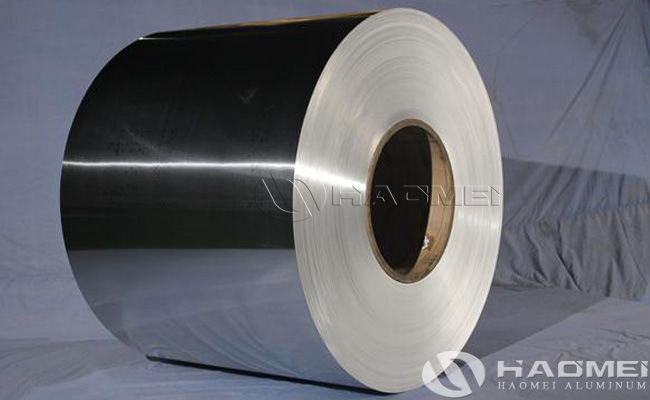
From the perspective of alloy design, the core characteristic of China 8079 aluminum foil is “high-iron, low-silicon”: the iron content is controlled at 0.7%-1.3%, and the silicon content is strictly limited to 0.05%-0.3%, far lower than the 0.4%-0.8% silicon content range of the 8011 aluminum foil. The dispersed precipitation of fine intermetallic compounds can uniformly refine the grains, improving material strength and avoiding the brittle second phase caused by high silicon content, thus reducing the risk of pinholes and microcracks at the compositional level. Haomei 8079 aluminum foil covers a full thickness range of 6μm-0.2mm and a width of 100mm-1700mm. We routinely supply the O soft temper, and can also customize the H14-H18 hard temper according to requirements. Core performance parameters all reach advanced industry levels: 8079 O aluminium foil have a tensile strength of 80-110MPa, elongation after fracture ≥22%, cupping test value ≥7.2mm, and plasticity performance is more than 15% better than 8011 aluminum foil products of the same thickness; the pinhole rate of the double-zero 6μm specification is ≤12 pinholes/㎡, 40% lower than 8011 aluminium foil of the same thickness; water vapor transmission rate ≤0.2g/(m²·24h), oxygen transmission rate ≤0.3cm³/(m²·24h·0.1MPa), demonstrating a significant improvement in barrier performance.
The core advantages of China 8079 aluminum foil are reflected in performance upgrades across three key dimensions.
Firstly, its extremely low pinhole rate results in high barrier reliability. I experienced this firsthand when working with a pharmaceutical client in Southeast Asia: The region experiences consistently high temperatures and humidity. Previously, using ordinary 8011 blister aluminum foil, the client’s drug shelf life was shortened by nearly 30%. After switching to 8079 aluminum foil, the pinhole rate decreased by almost half, and barrier stability in humid and hot environments was significantly improved, ultimately ensuring the drug’s shelf life fully met standards. This client has been a repeat customer for six consecutive years.
Secondly, its high plasticity provides molding stability. It has higher elongation and more uniform deformation, with a wall thickness reduction deviation of ≤8% during deep drawing, reducing the likelihood of localized cracking and wrinkling. This makes it suitable for complex molding scenarios such as irregularly shaped blister packs and deep-drawn containers.
Thirdly, its wide temperature range weather resistance allows the material to maintain stable performance within a range of -73℃ to 371℃, with no performance degradation after high and low temperature cycling. It exhibits excellent resistance to humid heat and salt spray, making it suitable for harsh working conditions such as tropical and coastal environments.
To fully unleash the alloy potential of 8079, we have implemented targeted process optimizations across the entire production process. At the raw material stage, we employ deep-bed ceramic filtration combined with a two-stage online degassing process, controlling the hydrogen content in the molten aluminum to below 0.1ml/100gAl, reducing pinhole defects from the source. In the rolling process, we match the deformation characteristics of low-silicon alloys, optimizing the surface roughness of the work rolls and the viscosity of the rolling oil to avoid surface streaks and color differences. The finished product annealing utilizes a stepped heating recrystallization process, with furnace temperature control accuracy within ±1℃ and a total roll hardness deviation ≤7MPa, eliminating uneven hardness issues.
Currently, China 8079 aluminum foil is widely used in three core areas: In the pharmaceutical packaging sector, it is the preferred substrate for PTP blister pack foil and tropical export pharmaceutical packaging, and has passed pharmaceutical material certifications in multiple countries; in the high-end food sector, it is used in high-barrier composite bags for freeze-dried foods, dairy products, and baked goods, extending product shelf life by more than 40%; and in the new energy and electronics sector, it serves as the substrate for lithium battery soft-pack aluminum-plastic film and cable shielding layers, exhibiting excellent bending performance and remaining crack-free even after repeated folding.
Haomei Aluminum have an annual production capacity of 15,000 tons of 8079 aluminum foil, with standard specifications kept in stock. Regular orders are delivered within 15 days, and we support customized slitting and surface treatment. All export products are packaged in five layers of vacuum moisture-proof packaging, suitable for long-haul ocean shipping. We also provide full-process technical support, including selection consultation, sample testing, and production line debugging, to help customers accurately match their material needs.
