
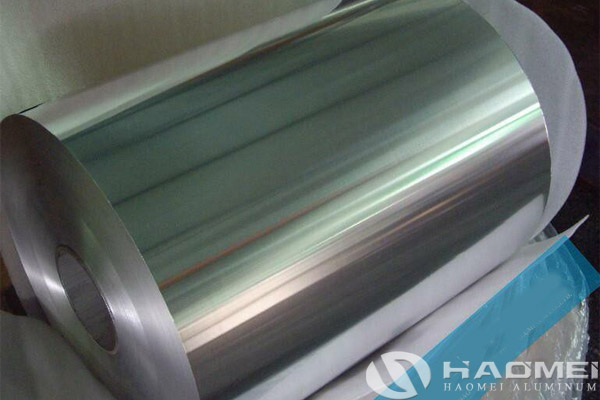
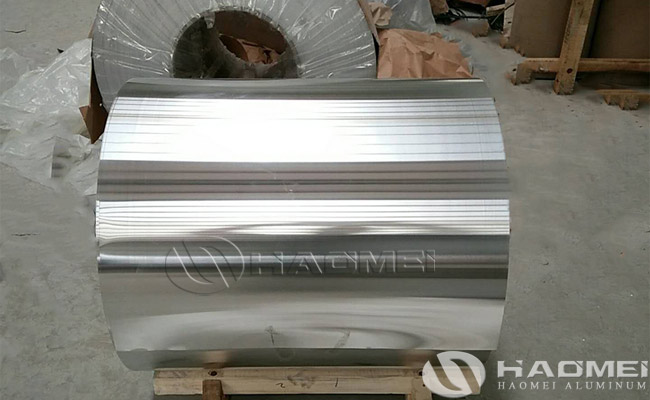
Bare aluminum foil—often referred to as “plain foil”—is a foundational aluminum product created through the melting, casting, and cold-rolling of aluminum ingots. It undergoes no further processing, such as coating, lamination, printing, or embossing. Retaining its original silvery-white metallic surface and inherent material properties, it serves as a versatile substrate for various types of deep-processed aluminum foil products. Haomei Aluminum offers a comprehensive selection of bare aluminum foils across all standard alloy grades and thicknesses, designed to meet the diverse deep-processing requirements of customers worldwide.
Key Specifications and Core Parameters
Bare aluminum foils are available in a wide variety of alloys and tempers, allowing for flexible selection based on specific downstream processing needs. All core parameters comply with international standards.
– Alloy Grades: The 1xxx series (pure aluminum, such as 1060 and 1235) features an aluminum purity of ≥99.35%, offering excellent electrical conductivity and cleanliness—ideal for electronics and food-grade applications. 3xxx-series rust-resistant aluminum is based on 3003 aluminum foil, with 1.0%–1.5% manganese added to form dispersed strengthening phases. It offers high strength and excellent resistance to heat, humidity, and salt-spray corrosion, making it well-suited for applications such as outdoor construction materials, anti-corrosive packaging, and air heat exchangers. The 8xxx series (including 8011, 8021, and 8079) utilizes iron and silicon to optimize strength and formability, making these alloys the preferred choice for packaging and stamping applications.
– Tempers: We offer a full range of tempers, from the fully annealed “O” temper (soft) to strain-hardened H14/H18 tempers (hard). The soft temper provides superior plasticity, making it well-suited for deep drawing and lamination, while the hard temper offers high rigidity, ideal for high-speed processing lines and structural support applications.
– Specifications: Available in thicknesses ranging from 6μm to 200μm, covering the full spectrum of double-zero, single-zero, and heavy-gauge foils. Widths range from 100mm to 1700mm and can be customized to match the roller width of the customer’s equipment. Each coil can weigh up to 2.5 metric tons and comes with a standard 76mm or 152mm core, making it fully compatible with continuous production lines.
– Performance Metrics: High-precision thickness tolerance is controlled within ±2%, with a deviation of ≤2% between the start and end of each coil. For gauges above 12μm, the pinhole count is ≤5 per m²; for 6μm high-precision double-zero foil, it is ≤15 per m². Surface residual oil is ≤3mg/m², and wetting tension is stabilized between 34–38 mN/m, allowing the material to proceed directly to downstream processing.
Key Product Features
As a foundational material in the aluminum processing industry, the core value of bare aluminum foil lies in its processing flexibility and controllable performance.
First, it offers broad processing compatibility, suitable for various downstream operations such as lamination, coating, stamping, slitting, and embossing. Customers can select the specific post-processing steps required for their end products, avoiding unnecessary costs for redundant pre-treatment. For clients with their own coating lines, we can pre-adjust the surface tension of the plain foil to match their specific coating systems—eliminating the need for an additional surface pre-treatment step and increasing overall production line yield by 2–3 percentage points.
Second, performance can be precisely tailored. By adjusting alloy composition, rolling passes, and annealing processes, we can accurately control material properties—such as strength, ductility, and corrosion resistance—to meet the specific mechanical and operational requirements of different processing environments.
Third, procurement costs are predictable. Without additional coating or lamination steps, the raw material cost structure remains transparent. This makes it an ideal choice for enterprises with in-house deep-processing capabilities, helping them optimize supply chain costs through bulk procurement.
Primary Application Areas
Bare aluminum foil is used across the entire spectrum of aluminum foil processing applications.
In the flexible packaging sector, it is laminated with plastic films such as PET, PE, or CPP to create aluminum-plastic composite packaging for food, pharmaceuticals, and personal care products, providing an effective barrier against moisture.
In coating applications, it serves as a substrate for various coatings—including adhesives, carbon, hydrophilic layers, and anti-corrosion treatments—and is compatible with processes such as roller coating and rotogravure printing.
In the stamping and forming sector, it is used to manufacture products like aluminum foil food containers, heat exchanger fins, and capacitor housings.
In engineering, it functions as an insulation and reflective layer for buildings, pipelines, and cold-chain equipment.
In the electronics industry, it is utilized for cable shielding and as an electrode material for components such as electrolytic capacitors.
Haomei Aluminum operates an aluminum foil production line with an annual capacity of 100,000 tons. The entire production process is equipped with online X-ray thickness measurement and surface defect detection systems. Our products meet international standards, including FDA, EU 1935/2004, RoHS, and REACH certifications. Standard specifications can be delivered within 15–20 days; we also support small-batch sampling and customized parameter adjustments. For export, products are packaged using a five-layer vacuum, moisture-proof system, designed to withstand the rigors of long-distance ocean transport. Please contact our sales and technical team to request detailed technical specifications or free samples.
