
A plain aluminum foil jumbo roll—also referred to as a master coil or simply an “aluminum foil jumbo roll”—is a wide-width coil of aluminum foil produced through processes including melting and casting, hot rolling, cold rolling, foil rolling and annealing. Plain aluminium foil is typically supplied as an industrial raw material to facilities specializing in lamination, slitting, packaging material processing, or the production of aluminum foil containers. It can subsequently undergo processes such as slitting, rewinding, embossing, coating, laminating, printing, or stamping.
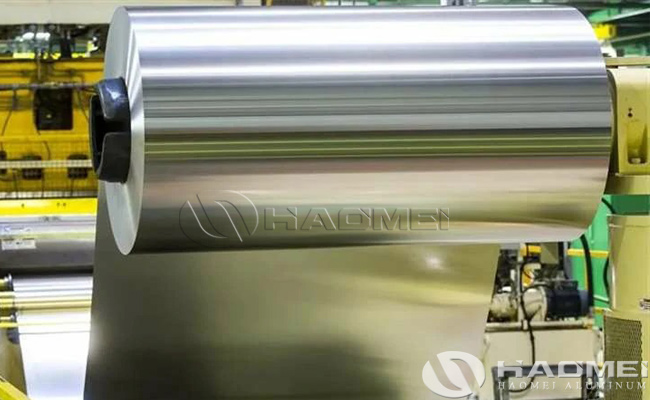
The term “plain” generally refers to an aluminum foil surface that has not been embossed, printed, or treated with color or specialized coatings. Depending on the intended application, the surface may be bright on one side or exhibit a relatively uniform appearance on both sides. Due to the “double-rolling” (or pack-rolling) technique used during production, thinner gauges may show a visible difference between a “bright side” and a “matte side”; therefore, specific requirements regarding surface gloss should be clarified during the procurement process.
Common Alloy Grades
Plain aluminum foil jumbo rolls are commonly produced using the following alloys:
– 1235: A pure aluminum alloy with an aluminum content of at least 99.35%. It offers excellent ductility, barrier properties, and processability, making it ideal for flexible packaging lamination, adhesive tapes, and insulation materials.
– 8011: An Al-Fe-Si series alloy. With its superior strength and effective control over pinhole formation, it is well-suited for applications such as packaging, container manufacturing, lamination, and household foil production. It is one of the most widely used aluminum foil alloys.
– 8079: Features excellent elongation, flexibility, and barrier properties; commonly used in high-barrier flexible packaging, composite materials for pharmaceutical packaging, and similar applications.
– 3003: Suitable for foil applications requiring higher strength or specific formability; the available thickness range should be confirmed based on specific manufacturing processes.
The choice of alloy should be determined by the intended downstream processing methods, final product thickness, stamping depth, composite structure, and barrier requirements.
Common Specifications and Tempers
Aluminum foil jumbo rolls typically range in thickness from approximately 0.006 mm to 0.200 mm. Foils in the 6–20 μm range are frequently used for flexible packaging, lamination, and insulation materials; 20–50 μm foils are used for adhesive tapes, composite packaging, and the production of certain containers; thicker gauges are utilized for embossing, stamping, or specialized industrial applications.
Standard widths include 200 mm, 300 mm, 500 mm, 1000 mm, 1200 mm, 1250 mm, 1300 mm, and wider. Master coil width, core inner diameter, outer diameter, and coil weight are typically customized according to the specifications of slitting equipment and requirements for ocean freight loading. The most common temper is “O” (fully annealed/soft), which facilitates lamination, embossing, folding, and stamping; certain specialized applications may require “H” tempers or specific mechanical properties.
Primary Applications of Plain Aluminum Foil
Plain aluminum foil jumbo rolls are used for:
Flexible food packaging, snack pouches, coffee bags, and composite packaging materials;
Composite materials for pharmaceutical packaging, substrates for blister foils, and medical packaging;
Aluminum foil adhesive tapes, thermal insulation materials, and HVAC ductwork composites;
Cable insulation, shielding layers, and moisture/vapor barriers for construction;
Disposable food containers, container foils, baking foils, and consumer-grade household aluminum foil;
Paper-aluminum or plastic-aluminum laminates, as well as materials intended for printing and embossing.
If the product is intended for contact with food or pharmaceuticals, or for use in specific composite structures, its suitability must be verified against the regulations of the target market, end-product standards, and specific processing requirements.
Key Quality Considerations for Purchasing Aluminum Foil Jumbo Rolls
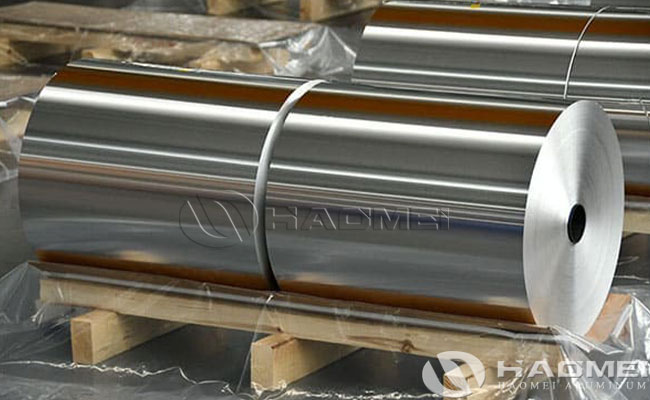
When procuring plain aluminum foil rolls, it is essential to specify the alloy, thickness, width, temper, surface grade, pinhole requirements, wetting tension, number of splices, and coil specifications. For applications involving lamination or printing, additional factors such as surface cleanliness, residual oil levels, flatness, edge quality, and the condition of the coils after slitting should also be verified. Export packaging typically utilizes moisture-proof paper, plastic film, protective boards, and either wooden pallets or fumigated wooden crates to minimize the risks of moisture exposure, oxidation, physical damage (dents/crushing), and edge deformation during ocean transit. Specific technical parameters should be governed by the contract, the Material Test Certificate (MTC), and any technical agreements confirmed by both parties.
Haomei Aluminum offers plain aluminum foil jumbo rolls in alloys such as 1235, 8011, 3003 and 8079. We provide customized solutions—including specific thickness, width, coil weight, and export packaging—tailored to your intended use, whether for lamination, slitting, container stamping, or industrial insulation.
