
As a technician at Haomei Aluminum specializing in aluminum foil for flexible packaging, I’ve long been addressing the material selection pain points of flexible packaging manufacturers worldwide. The industry is currently moving towards lightweighting, longer shelf life, and high-speed mass production, making the problems of ordinary 8011 aluminum foil—such as excessive pinholes in thinner sizes, susceptibility to misalignment during high-speed lamination, and insufficient barrier stability in humid and hot environments—more and more prominent. Haomei 8079 flexible packaging aluminum foil, through its high-iron, low-silicon alloy composition, addresses these shortcomings at the material’s root, becoming the preferred barrier substrate for high-end flexible packaging. It is currently supplied to over 100 flexible packaging companies in more than 20 countries worldwide.
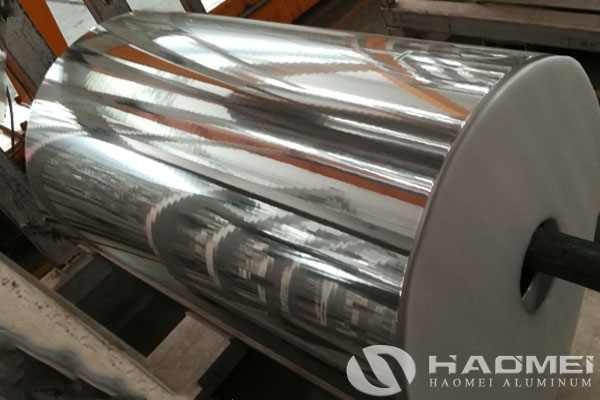
Haomei 8079 flexible packaging aluminum foil is supplied in the O soft temper as standard, with a thickness ranging from 6μm to 30μm, precisely matching the mainstream thickness range of flexible packaging. Among them, 6μm, 7μm, 9μm, and 12μm are standard specifications. The width is compatible with various high-speed laminating machines and slitting machines, ranging from 100mm to 1650mm, and supports the supply of master rolls with a maximum diameter of 2.5 tons, which can reduce downtime losses for customers when changing rolls. In terms of performance, it is specifically tuned for flexible packaging needs: the 6μm double-zero specification has a pinhole rate of ≤12 pins/㎡, with no pinholes larger than 0.1mm, far exceeding industry standards; water vapor transmission rate ≤0.2g/(m²·24h), oxygen transmission rate ≤0.3cm³/(m²·24h·0.1MPa), and barrier performance is improved by more than 30% compared to 8011 of the same thickness; the elongation of the O-state finished product is ≥22%, the cupping value is ≥7.2mm, and the molding toughness is excellent; the surface adopts a low residual oil process, and the wetting tension is stable at 34-38mN/m, allowing for direct printing, gluing, and lamination without additional surface treatment.
For flexible packaging production, the advantages of 8079 aluminum foil perfectly meet the dual requirements of production line efficiency and end-product quality.
First, there’s the barrier stability. I felt this most strongly when working with a Southeast Asian snack food customer: the region experiences high temperatures and humidity year-round. The customer’s original potato chip composite bags, made with 8011 7μm aluminum foil, often softened due to moisture caused by micropores during sea transport, shortening shelf life by nearly one-third. After switching to 8079 aluminum foil, the pinhole density decreased by almost half, and the barrier attenuation rate under humid conditions was less than 5%, ultimately achieving the product’s shelf life target. This customer has been a consistent repeat customer for four years.
Second, there’s high-speed production adaptability. Thickness tolerance is controlled within ±2%, plate straightness is ≤10I units, and tension is uniform throughout the process. It can adapt to high-speed dry lamination lines of 300m/min or higher, minimizing deviation and tape breakage during production, reducing the overall scrap rate by 2%-3%.
Third, there’s molding compatibility. High elongation allows it to adapt to various flexible packaging processes such as bag making, deep drawing, and twisting. Twisted packaging shows no springback, deep-drawn bags do not crack at the bottom, and the heat-sealing strength is uniform.
Fourthly, the product is fully compliant with regulations. It has passed FDA 21 CFR, EU 1935/2004, RoHS, and other certifications. Heavy metal and solvent residues are far below the limits, making it safe for direct contact with food, daily chemical products, and pharmaceutical contents.
Specifically, in flexible packaging scenarios, 8079 aluminum foil’s adaptability covers mainstream high-end needs:
First, high-barrier food composite bags, with 6-12μm specifications, are laminated with PET, NY, PE, and other films for packaging snacks, pet food, freeze-dried foods, and condiments, extending shelf life at room temperature to 12-24 months, especially suitable for long-cycle logistics scenarios in transoceanic exports.
Second, candy twist packaging, with 7-9μm double-zero foil for twist packaging of chocolate, nougat, and other products, offering high gloss, preventing springback and unraveling after twisting, and low pinholes to effectively prevent oil penetration.
Third, pharmaceutical and daily chemical flexible packaging, with 8-15μm specifications for aluminum-plastic bags of ointments, face masks, and pharmaceutical granules, blocking moisture and oxygen to prevent oxidation and deterioration of contents, while also being resistant to corrosion.
Fourth, cup lid films, with 12-20μm specifications for heat-sealable lid films for yogurt, jelly, and sauces, offering uniform sealing strength, easy tearing without residue, and compatibility with high-speed filling lines.
As a professional supplier of flexible packaging aluminum foil with an annual production capacity of 15,000 tons, Haomei 8079 aluminum foil product supports customized slitting, surface treatment, and performance tuning. All export products are packaged in five layers of vacuum moisture-proof packaging, suitable for ocean shipping environments. We firmly believe that good packaging aluminum foil should adapt to the production line and empower the product, rather than making customers compromise on the material. This is also the core driving force behind our continuous optimization of formulas and processes.
